Climate change is a direct threat to Midpen’s mission. Now and into the future, climate change has far-reaching consequences for the Bay Area’s natural environment and all of us who depend on it. Greenhouse gases released by burning fossil fuels for transportation and energy are changing our climate. As a result, we are seeing warmer temperatures, changes to plant and animal habitat ranges, more dangerous wildfires, sea level rise, and more intense droughts and floods. For Midpen this is an opportunity to lead by example and be part of the solution.


Midpen Surpasses Benchmark Goal for Curbing Carbon Emissions
Our most recent 2024 Greenhouse Gas Inventory shows Midpen continues to make great progress toward our greenhouse gas emission reduction goals.
Midpen’s Climate Action Plan, finalized in 2018, outlines efforts for meeting our goals to reduce operational emissions 20% by 2022, 40% by 2030, and 80% by 2050 as compared to our 2016 emissions. To track progress and maintain transparency about what actions we are taking to combat carbon emissions, every two years staff conduct a greenhouse gas inventory.

Our latest inventory shows that emissions in 2024 were 37% below the baseline, nearly reaching our next goal of 40% reductions by 2030. The inventory measures emissions compared to a 2016 baseline, counting emissions from vehicles, equipment and business travel (36% reduction), employee commutes (40% reduction), facilities (34% reduction) and tenant residences (31% reduction).
The primary drivers for ongoing and new emissions reductions included use of renewable electricity, the addition of more electric vehicles to our fleet, increased use of renewable diesel made from agricultural byproducts, sale of the old, energy inefficient Administrative Office building, and the hybrid commute policy implemented in the wake of COVID-19.
Midpen has more changes in the works to reduce emissions, including implementation of our Fleet Electrification Plan. By prioritizing electric vehicles and trucks that can use renewable diesel when we purchase new vehicles, fleet emissions have flattened out even as our fleet grows. By 2035, law will require almost all types of vehicles sold in the state of California to be zero-emission, so it’s important that we begin preparing the charging infrastructure and planning our transition. As we start to retire older, less efficient gasoline vehicles, fleet emissions should begin to drop. It is our hope that by doing the right thing and working to reduce greenhouse gas emissions internally, Midpen can draw attention to this critical issue and inspire others to reduce emissions.
Storing Carbon in Plants and Soils
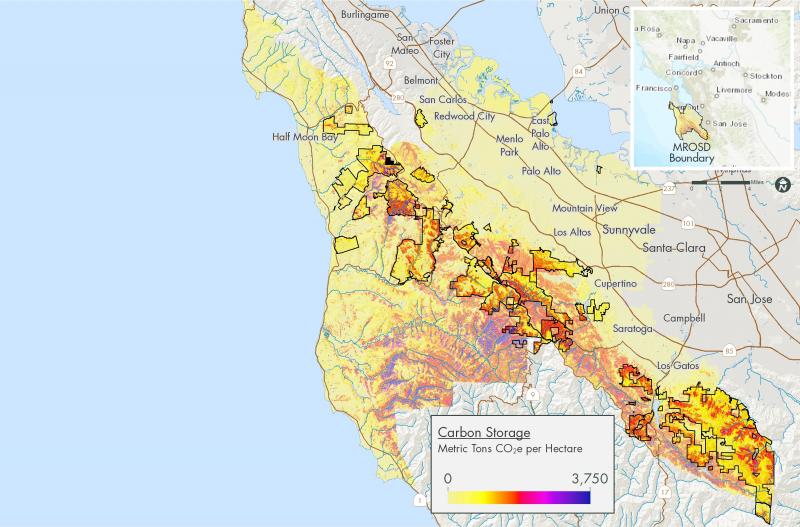
Midpen’s open space lands store tens of millions of tons of carbon in plants and soils. Developing that land would release much of the carbon into the atmosphere. By acquiring and preserving open space lands, Midpen keeps that carbon stored in the earth.
In addition, in a process called sequestration, plants breathe in more carbon every year, removing it from the atmosphere and storing it in their tissues and in soils. Every acre of open space land absorbs on average 1 ton of carbon every year, and sequestration can be four times that in ecosystems like redwood forests.
Midpen can manage the land to help it sequester more carbon and to make sure the carbon that's already locked away in plants and soils stays there long into the future. For example, Midpen is preparing to study the potential to increase carbon sequestration in rangelands by incorporating biochar into soils. Midpen is also implementing a Carbon Farming Plan at Bluebrush Ranch in Purisima Creek Redwoods with our partners at the San Mateo Resource Conservation District. Carbon farming refers to a variety of methods for increasing carbon sequestration and storage in agricultural and rangeland settings. The Bluebrush project will stabilize eroding soils, restore a small weedy pasture with native plants and utilize targeted, timed grazing there to control the weeds long-term.
Our Wildland Fire Resiliency Program is an example of land management that protects the carbon that’s already on the landscape, by reducing the potential for severe wildland fire that could threaten even our oldest, largest trees — our carbon-storing heroes.
Promoting Resilient Landscapes
Even if greenhouse gas emissions stopped tomorrow, some climate change impacts would still be inevitable. In fact, we’ve already felt them here at home — longer fire seasons, more brutal heatwaves, and winter atmospheric rivers are all influenced by climate change. To prepare to better withstand and respond to climate change impacts, Midpen is developing a Strategic Plan for Adaptation and Resilience to Climate Change (SPARCC). Climate change is likely to touch every part of Midpen’s work, from the health and safety of our staff and volunteers, to the trails and bridges that enable the public to enjoy our preserves, to the ecosystems we strive to protect. The SPARCC will integrate climate resilience throughout Midpen’s operations so we can keep the Preserves open, healthy, and safe, and keep delivering our mission.
Midpen also works with experts and regional partners to understand the vulnerability of habitats, plants and wildlife and identify land management actions we can take now to protect them in the future. Many of the actions that help make the landscape more resilient — able to absorb stress and maintain function in the face of climate change — are things land managers have always known are important. By protecting land from development, providing a system of connected refuges for plants and animals to move and adapt, and restoring ecosystems to minimize other stressors like invasive species and disease, Midpen protects the natural environment now and in the future.

You can follow our lead and take steps to reduce your own contributions to climate change while bolstering large-scale efforts. Driving and flying less, switching to electric appliances, eating less meat, buying clean energy from your local community choice energy provider and supporting laws and regulations that fight climate change are some of the most impactful actions you can take.

Stay informed!

Related Documents