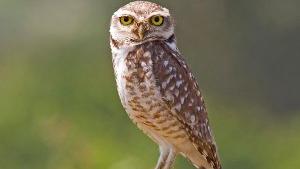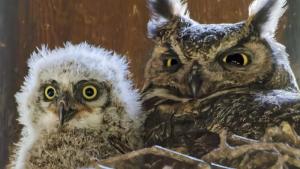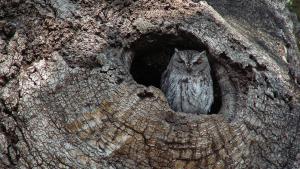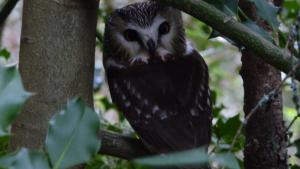
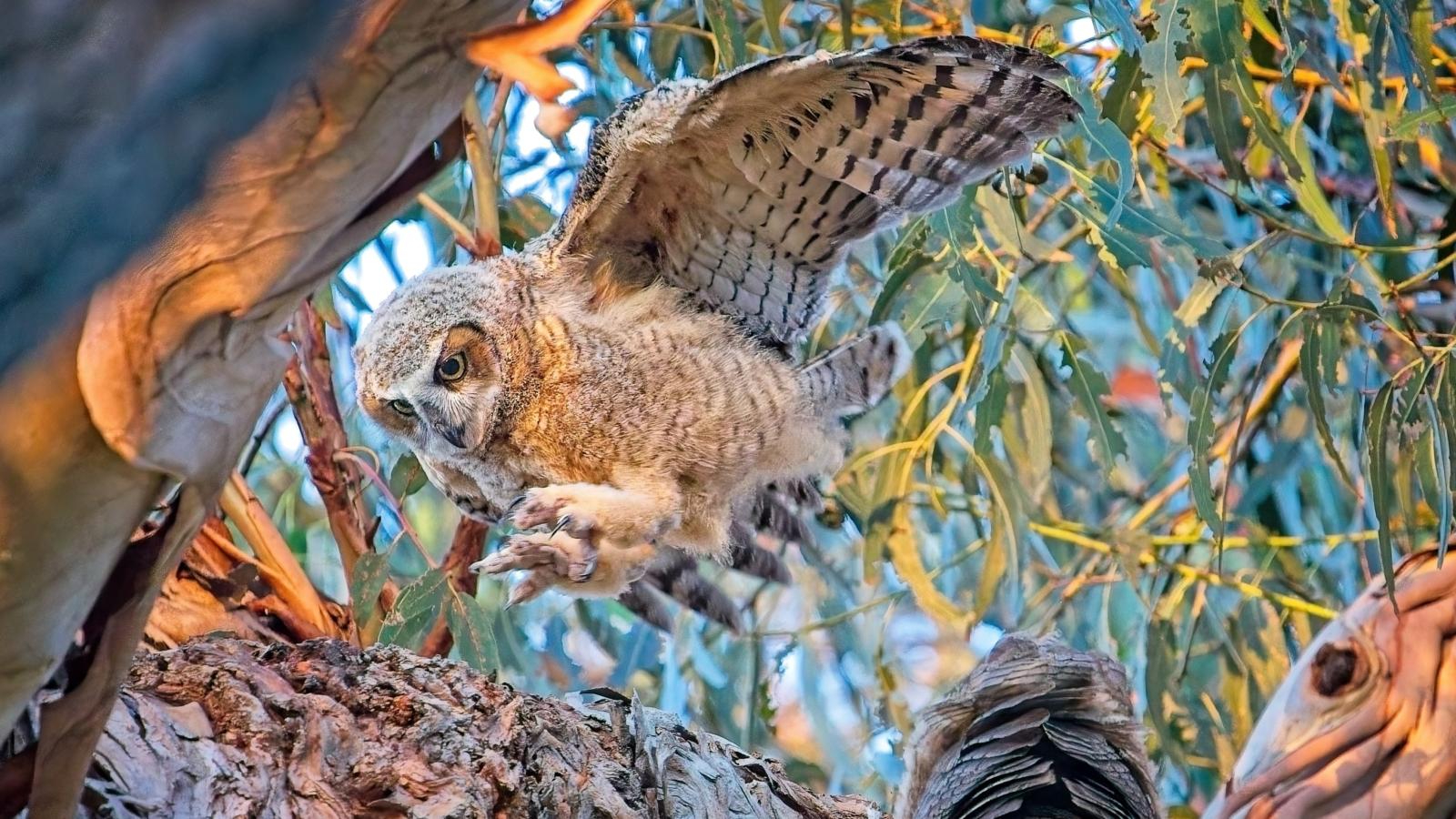
As the sun begins to stretch over the horizon or dip below it, when shadows are long and the forest is dark, Midpen’s feathery friends silently emerge from their roosts to hunt. Whoooooo are these mysterious birds of prey? Owls, of course!
Owls (order Strigiformes) are known for their large eyes, keen hunting skills and eerie hooting vocalizations. They are usually nocturnal and most active around dusk and dawn, though some species prefer daytime or change their hunting schedules depending on the time of year. Many owls mate for life, building strong bonds and often returning to the same nesting site year after year. There are over 200 species of owls globally that have adapted to live in a wide range of environments, from the freezing Arctic tundra to hot, dry deserts to more temperate forests and grasslands.
Like other birds of prey, owls are excellent hunters with sharp eyesight and powerful talons. However, they are differentiated by their flat, round faces with a circle of feathers surrounding each eye. Owls can adjust these tiny feathers to direct sounds towards their ear openings, sharpening their sense of hearing. The asymmetrical layout of these ear openings means that the same sound gets picked up at slightly different times and intensities by either ear. Comparing these minute differences helps the owl precisely locate prey, even when they cannot visually perceive them.
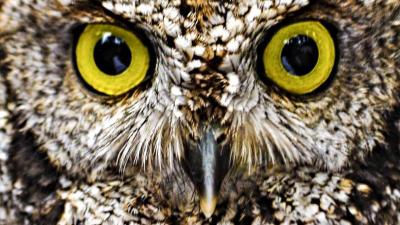
In addition to their exceptional hearing, owls have outstanding eyesight, especially in low lighting. Both of their eyes face forward, but, like most birds, their eyes are fixed in their socket. Therefore, an owl must rotate its entire head in order to change its field of vision. Owls can twist their necks 270 degrees, or three-quarters of a full circle, in both directions!
Owls are also renowned for their ability to fly in almost complete silence. Their large wings enable them to glide instead of flapping, which disturbs the air and creates sound. Additionally, owl feathers are specially structured and textured in a way that minimizes and absorbs any noise produced by their flight. This noiseless movement through the air helps owls better detect and sneak up on prey.
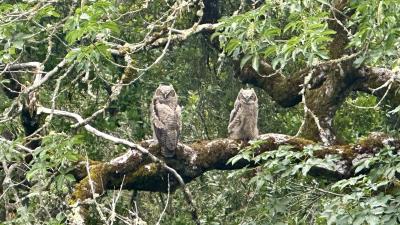
Owls use their unique adaptations to hunt small animals, such as insects, rodents, fish, and other birds. Larger species have also been known to go after larger prey, including snakes, hares and even foxes. While most owls swallow their prey whole, they are unable to digest certain parts of their meal, such as fur, bones, teeth or feathers. The undigested parts get compacted inside the owl’s stomach into a solid oval pellet which is later regurgitated. Scientists can collect and examine these pellets to learn more about an owl’s diet.
Although owls are most commonly associated with their deep hooting sounds, they produce a range of distinct vocalizations, including whinnies, screams, trills and hisses. These vocalizations aren’t random; every sound an owl makes has a specific purpose, from warning off intruders to calling out to a mate.
Owls at Midpen
You can hear the iconic hoots of many owl species (including those below) in Midpen preserves, especially in winter and early spring when their breeding season begins. If you're lucky, you may even spot an active owl around dusk or dawn.