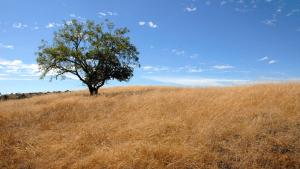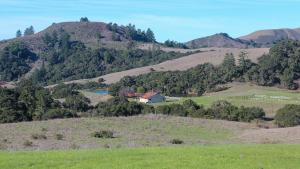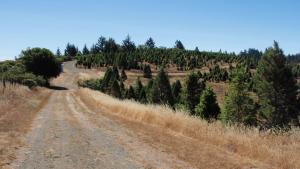
Mature forests are complex ecosystems that have survived for millennia. They teach us about living with fire and climate change, and how to care for the formerly logged forests on Midpen lands.
Building on the success of several partner projects in the region, Midpen is planning for a similar restoration forestry project to improve the health of 121 acres of redwood forest in La Honda Creek Preserve and is currently developing a work plan based on current science and community and partner input.
Comment Form
Share your comments and questions about this project using this online form.



Goals and Objectives
Forests throughout the Santa Cruz Mountains have been significantly altered by humans through intense historic logging resulting in dense regrowth, fire suppression resulting in fuels accumulation, rural development, introduced pathogens causing diseases such as sudden oak death and the effects of climate change.
The goals of this project are to:
- Restore and promote healthy, resilient, mature forests.
- Improve watershed health and function by reducing sedimentation primarily from legacy logging roads.
- Enhance wildlife habitat and carbon storage.
- Increase the forest's resilience to fire, disease and climate change.
Proposed Project Locations
Two forested areas of La Honda Creek Open Preserve have been identified as locations for forest health treatments as part of this project, shown in purple on the map linked below and totaling approximately 120 acres.
The proposed project areas are in the northern portion of this large preserve, west of Skyline Ridge, partially in an area designated as a Conservation Management Unit (CMU). CMU areas are managed primarily for natural resource protection including sensitive plant and wildlife species and their habitats.
Stay informed!
What is the project and what is the project goal?
While only time can create old-growth forests, science shows restoration forestry can accelerate the pace at which second-growth forests transform into mature, diverse forests that provide better wildlife habitat, carbon storage and fire resilience. The purpose of the La Honda Creek Preserve Forest Health project is to improve forest health, biodiversity and using the best available science and management practices. Stressors include pests, pathogens, and the compounding impacts of climate change, such as heat and drought stress, as well as the increased risk of catastrophic, stand-replacing fires that result in a fundamental state change (i.e., loss) of forested ecosystems. By protecting and accelerating the development of old growth forest ecosystems, the La Honda Forest Health Project aims to increase biodiversity, improve watershed conditions, provide enhanced wildlife habitat, and safeguard stable, long-term carbon storage.
What is restoration forestry?
Restoration forestry is a science-based practice of altering the development trajectory of a forest to a healthier, more resilient state. Restoration forestry projects start with an assessment of current conditions, then a prescription that matches the benefits of different treatment alternatives with specific goals for that stand of trees regarding forest health, habitat value, fuel reduction, and carbon storage. Treatments can include selective thinning of over-crowded trees to provide more resources, such as water and light, to larger trees with the potential to be future old-growth trees. Over time, the “future old-growth” trees grow larger canopies and add width and store carbon at a faster rate, making them more resilient to disturbances, such as windthrow, pests, pathogens, drought, and fire.
What is a Timber Harvesting Plan (THP)?
A THP is a permitting mechanism that will allow us to implement the recommended forest health treatments and road improvement work outlined in the Forest Management Plan. A THP is the equivalent of a California Environmental Quality Act (CEQA) Environmental Impact Report (EIR), with CAL FIRE as the lead agency, and offers the most stream-lined, cost-effective, and efficient means of meeting the project goals, while simultaneously upholding rigorous environmental, public, and agency review standards. THPs are prepared by Registered Professional Foresters, are pursuant to California’s Forest Practice Rules, and undergo interdisciplinary environmental review and inspection from local, state, and federal agencies to ensure regulatory compliance. The THP process typically spans two years from plan development, public review, and CAL FIRE review and approval. Once approved, THPs are valid for three years, with the option to renew once for an additional two-year period.
Why will some trees be removed as part of this project and what will happen to them?
Selective thinning of dense second or third-growth redwood stands is a restoration forestry technique that has been successfully used by Midpen’s conservation partners in the region and is proposed as part of Midpen’s La Honda Creek Preserve Forest Health Project. Midpen's goal in selectively removing trees is to create an ecological benefit. Selective thinning and strategic cutting help restore a more natural range of tree sizes and ages, increase light to the forest floor to support understory diversity, and create downed wood and snag habitat that many species rely on for shelter, foraging, and nesting. When cut trees can contribute to these habitat features, they are intentionally retained on site to enhance structural diversity and ecological resilience.
Where ecologically beneficial and feasible, removing cut trees from the forest reduces fuels for potential wildland fire and re-directs the stored carbon to a more stable state. If those trees can be reused commercially, our forest management policies require that any funds generated be put directly back into supporting the restoration project. Most trees will be too small to have any commercial value.
How is Midpen navigating potential impacts to protected species, such as the marbled murrelet?
Marbled murrelets are endangered seabirds that fly inland to nest high up in old-growth trees. In consultation with the California Department of Fish and Wildlife (CDFW), Midpen’s wildlife biologists determined that marbled murrelets are the only protected species within the project area that may experience potential impacts from project operations. Based on this determination, Midpen has completed a comprehensive habitat assessment and audio-visual surveys for marbled murrelet and has not detected any marbled murrelet to date. However, the project area is adjacent to known marbled murrelet habitat and portions of it exhibit characteristics of future high-quality habitat as they develop more old growth conditions. As such, Midpen has consulted with CDFW regarding any appropriate avoidance measures and modifications that may be warranted throughout project implementation and will follow the guidelines issued by CDFW. Midpen’s La Honda Creek Preserve Forest Health project will ultimately restore and improve habitat for the marbled murrelet by accelerating the return of old-growth forest conditions.
Is thinning the forest the only way to accelerate growth?
No. Prescribed fire can have similar effects by killing smaller diameter trees, effectively freeing up water and light and reallocating growing space to larger, more resilient trees. However, due to the unnaturally high fuel loads within the project area, prescribed fire is not currently recommended for this area at this time.
Highlights
This video highlights restoration forestry projects in the Santa Cruz Mountains and beyond completed by our partners at Save the Redwoods League, Sempervirens Fund, California State Parks and Peninsula Open Space Trust. It is a recording of a presentation given to Midpen's board of directors in July 2021.
Restoration Forestry Science
Current science shows us that diversity of age, species, size and genetics of trees are key to forest resilience and survival. Mature forests are spatially diverse with trees standing together and individually interspersed with fallen logs and natural openings.
Selectively removing some small trees in formerly logged forests can accelerate tree growth by reducing competition for sunlight and water, putting the forest on a path to return more quickly to mature, old-growth conditions.
Selective Thinning is One Forest Health Strategy
Selectively removing some small trees in formerly logged stands is a restoration forestry technique that has been successfully used by Midpen’s conservation partners in the region and is proposed as part of Midpen’s La Honda Forest Health Project. Thinning from below also reduces ladder fuels to increase wildland fire resiliency. This strategy can accelerate tree growth by reducing competition for sunlight and water, putting the forest on a path to return more quickly to mature, old-growth conditions.
Using Timber Harvest Plans for Conservation Projects
In order to implement this strategy, Midpen will develop an environmental review with public agencies and the interested public, and a subsequent permitting process with regulatory agencies to create a timber harvest plan that guides the restoration project. These plans are prepared by registered professional foresters and detail site-specific treatments for each forest stand to achieve desired ecological outcomes. The process for creating these plans typically takes two years with CAL FIRE as the lead agency and includes a robust public process and inspection from local, state and federal agencies prior to approval.
In some cases where feasible and ecologically beneficial, removing selectively thinned trees from the forest can reduce fuels for potential wildland fire while keeping the stored carbon intact. While most selectively thinned trees would be too small to have any commercial value, if such trees could be used as building materials, Midpen’s forest management policies require that any funds generated would be put directly back into supporting the forest restoration project.
Forests: A Powerful Tool for Climate Change Resilience
Forests actively clean the air and store carbon. Mature redwoods capture and store more carbon per acre than any other tree or plant. The trees in the La Honda Creek Preserve project area contain approximately 440,000 metric tons of carbon dioxide. They sequester approximately 16,500 metric tons of carbon each year, equivalent to avoiding the emissions of 3,600 cars driven in one year. The proposed project would increase carbon storage and sequestration over time by accelerating the growth of redwood trees.
Adaptive Management
By using control plots and measuring tree-stand structure and soil changes, Midpen can make any needed adjustments to subsequent work stay on track to reach this project's larger restoration goals.
More About Forest Health Projects
Anticipated Timeline
June 26, 2019 | Public meeting: Award of contract for forest assessment and planning. (agenda and minutes) |
2019-2021 | La Honda Forest Health Assessment and Management Plan prepared. |
July 28, 2021 | Public meeting: Midpen board adopts La Honda Forest Health Assessment and Management Plan and authorizes addition of newly purchased parcel to the project. (agenda and minutes) |
Oct. 12, 2022 | Public meeting: Midpen board review of Forest Health Plan. (agenda and minutes) |
July 26, 2023 | Public meeting: Study session with the Midpen board on the La Honda Forest Health Project. (agenda and minutes) |
Oct. 2, 2023 | Request for proposals issued seeking a registered professional forester to prepare a timber harvest plan, conduct community outreach and support project implementation. |
Jan. 10, 2024 | Public meeting: Award of contract to registered professional forester. (agenda and minutes) |
2024 - 2025 | Preparation of timber harvest plan, community outreach. |
Oct. 2025 | Informational open house events. Oct. 21 in-person in Woodside and Oct. 23 via Zoom. |
| Tentative 2026-2027 | Timber harvest plan submitted to CAL FIRE for review. |
| Tentative 2026-2028 | Pending approval from CAL FIRE, initiate implementation of forest health treatments. |
Partners and Community
Midpen is working with several regional partners who have successfully completed similar projects and studies to develop a sound, science-based approach.



Related Projects