
Published February 5, 2026
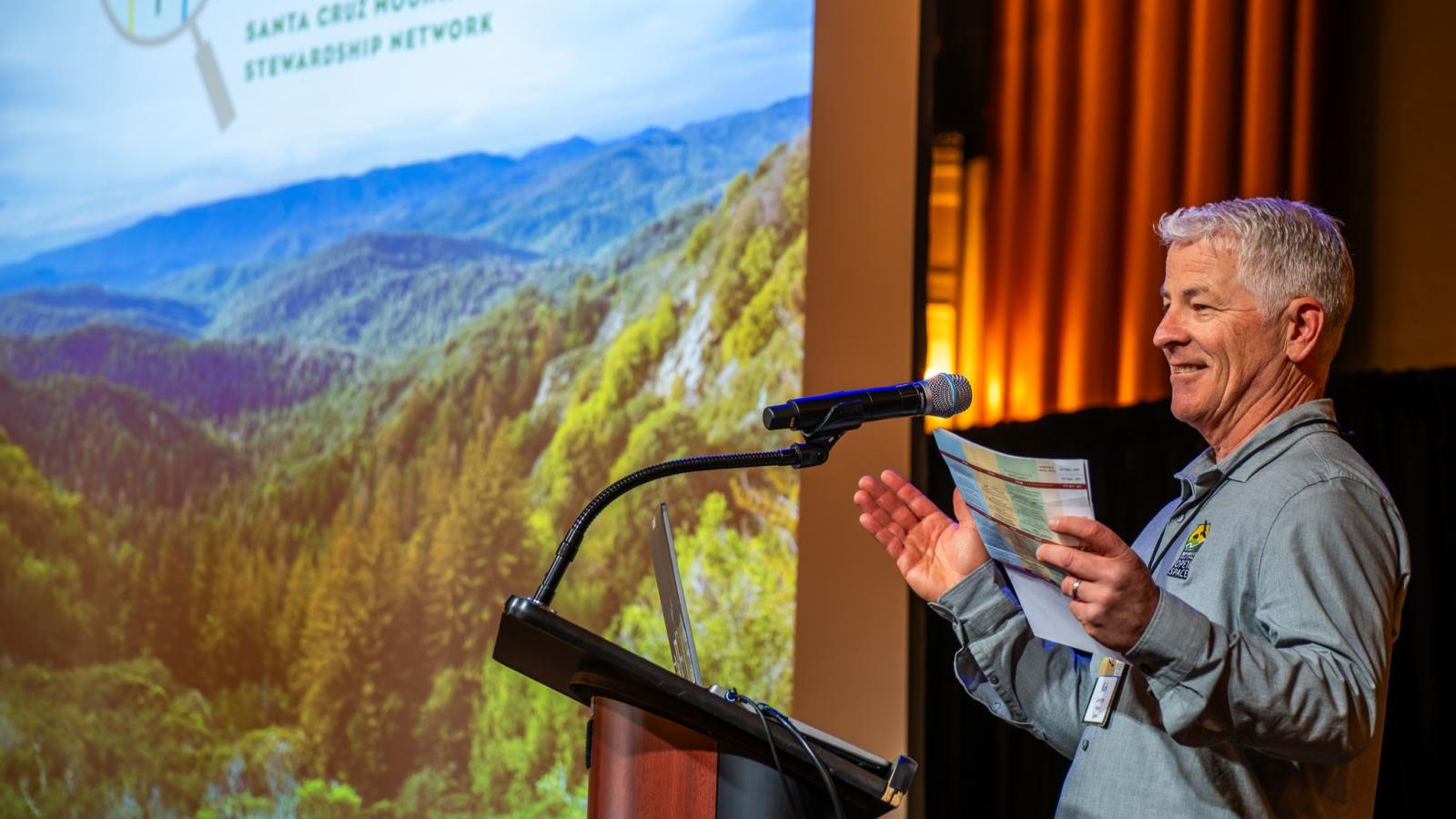
The sold-out Science and Stewardship Symposium recently took place in Santa Cruz, bringing together more than 250 leaders working on scientific research and hands-on land stewardship in the Santa Cruz Mountains region.
“The Symposium is designed to spark new connections, provide a platform for knowledge-sharing and build partnerships that inspire science-based solutions that help us care for the landscapes, plants, wildlife and human communities of Santa Cruz Mountains region,” said Santa Cruz Mountains Stewardship Network (SCMSN) Executive Director Dylan Skybrook. “The symposium brings diverse perspectives into one room to learn from one another, align goals and strengthen communication and partnerships.”
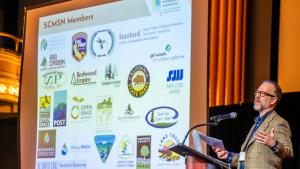
The event was hosted by the Santa Cruz Mountains Stewardship Network (SCMSN), a coalition of 25 organizations, and presenting partners including the Midpeninsula Regional Open Space District, Santa Clara Valley Open Space Authority and others. The all-day program featured dozens of presentations and posters bridging science and care of the land by scientists, Native Tribes, policy makers, land managers and more.
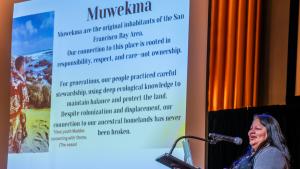
“The Santa Cruz Mountains are part of one of the world’s most biologically rich areas, making it an important place to apply science-based land management,” said Midpen Natural Resources Manager Kirk Lenington. “This region’s unique mix of ecosystems, located so close to one of the most populated areas in the state, makes it especially vulnerable and valuable for conservation. There is so much still to be learned about caring for these essential landscapes.”
The Santa Cruz Mountains are part of what is known as the California floristic province, one of 36 recognized biodiversity hotspots in the world due to its high diversity of plants and wildlife including dozens of rare and endemic species found nowhere else on earth.
“Science-based care of protected landscapes supports not only plants and wildlife, but also the quality of life for millions of nearby residents by providing essential benefits such clean air, clean water, buffers against wildfires and floods, local food, cultural and recreational opportunities that nurture human health and community identity,” said Lenington.