
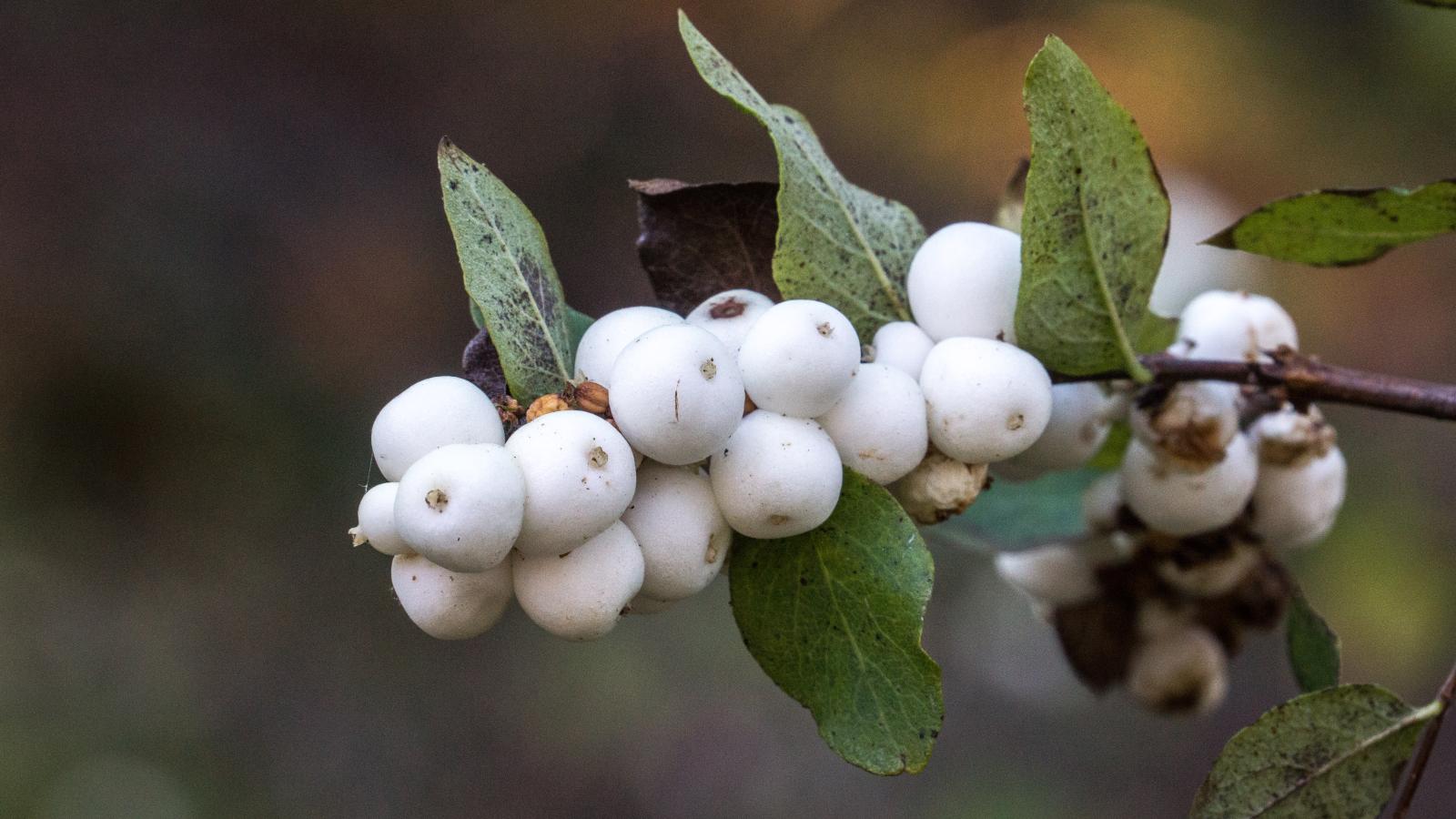
Fruity Fall
Published November 5, 2026
In spring, wildflowers get all the love. As they should—they’re gorgeous! But what then comes after the rainbow of petals and super blooms abuzz with bees? In fall, it’s time to focus on fruits.
Perhaps you’re thinking, “Huh? What fruit? Like those invasive Himalayan blackberries or tiny native strawberries?” Yes and yes, but so much more. Our idea of “fruit” typically gets defined by the produce section of the grocery store. This botanical misnomer is of no consequence when picking out a bell pepper, cucumber, or eggplant (yes, all fruits). Yet this misnomer can have a larger effect if it limits what we notice in the natural world; we often fail to enjoy, appreciate, and protect what we don’t see or understand.
Exploring Midpen’s preserves is an easy way to start paying better attention to the wild fruits all around us. But first, some Botany 101.
Reproduction is the name of the botanical game. For a flower to become a fruit filled with seeds, two processes must happen successfully. First, pollination. A microscopic pollen grain from the male part of a flower has to get to the female part of another flower of the same species. Since plants can’t walk or swipe right on a dating app, they rely on wind or animals, like insects and hummingbirds, to do this job. Flowering plants have evolved several strategies to advertise themselves to pollinators as the hottest spot in town, such as fragrance, nutritious pollen, sugary nectar, and petals splashed with “nectar guides” pointing the pollinators where to go.
Yet even after pollen is transferred, there’s no guarantee of fertilization, the second essential step toward reproductive success. Next, the pollen has to make the journey through the pistil, or the three female parts: from the sticky spot, called the stigma, located on the tip of the wand-like style, and down to the flower’s ovary, usually found at the base of the petals. To do this, the pollen grain “grows” a tube to reach the ovules, or eggs. This might take months or might not even happen at all.
But if it does? Over time, the ovary grows and matures, or ripens, into a fruit. Those pretty petals, no longer needed to woo pollinators, shrivel and usually drop off. Whether a tough pod like a lupine or the squishy berries of honeysuckle, the fruit is a womb, protecting the next generation of seeds. Are you wondering if every time you bite into your favorite fruit, you are, botanically speaking, enjoying a swollen ovary—? You are!
As with so many aspects of the natural world, much of the beauty of fruits is in their diversity. There are as many different kinds as there are flowers. Each has its unique architecture and geometry based on the number of segments of its ovary. This is easy to see in the pieces of an orange, or trailside, the three chambers of a fruiting Douglas iris, checker lily, and hundreds of others.
Fruits are categorized by whether or not they are fleshy, like a thimbleberry, or dry, like the winged “helicopters” of a big-leaf maple tree. And still, botanists have more classifications based on how the dry fruits split open, such as a California poppy’s long, scimitar-shaped “capsule” that can explode its dozens of black seeds up to six feet away.
A plant’s partnership with animals doesn’t end with pollination. Many fruits are tasty and nutritious, giving them a better chance of attracting animals and being dispersed away from the parent plant, encouraging their evolutionary success. Signs of this interdependence are all over the open space, from manzanita fruits in grey fox scat or stands of oak trees sprouted from caches of acorns forgotten by Scrub Jays—yes, nuts are fruits, just one-seeded ones.
Of course, human animals are partial to fruits, too. The Ohlone have gathered bay nuts, a fruit related to avocados, in the fall since time immemorial. Remnants of old orchards and vineyards are found in several Midpen preserves. Some fruits still play important ecological roles even after their seeds have been released. For example, the husks of wild cucumber fruits can be used as nurseries for juvenile insects.
What are your favorite wild fruits to observe in nature? Blue elderberries, toyons, madrones, globe lilies? Poppies, canyon oaks, or even poison oak berries, a vital winter food source for migratory and resident songbirds? Ready to go fruiting?
Please remember to observe fruits with your eyes or camera lens; foraging is prohibited in Midpen preserves.