
Published February 5, 2026
While you are busy making dinner reservations and panic-buying chocolates, a different kind of love is blooming in the underbrush. As Valentine’s Day rolls around, romance isn’t just for humans. Late winter marks the peak of skunk mating season, a time when these usually shy and solitary animals become far more visible. From quiet open spaces to bustling suburban neighborhoods, skunks are on the move, following their noses—and their hearts.
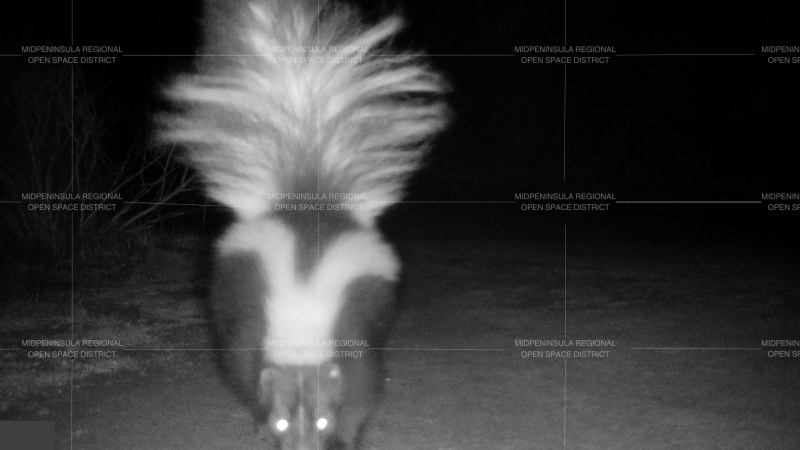
Here in the Bay Area, the most familiar face (and scent) belongs to the striped skunk (Mephitis mephitis). Instantly recognizable by its bold black-and-white stripes, this adaptable species can be found everywhere from urban neighborhoods to open space preserves and agricultural areas throughout the region.
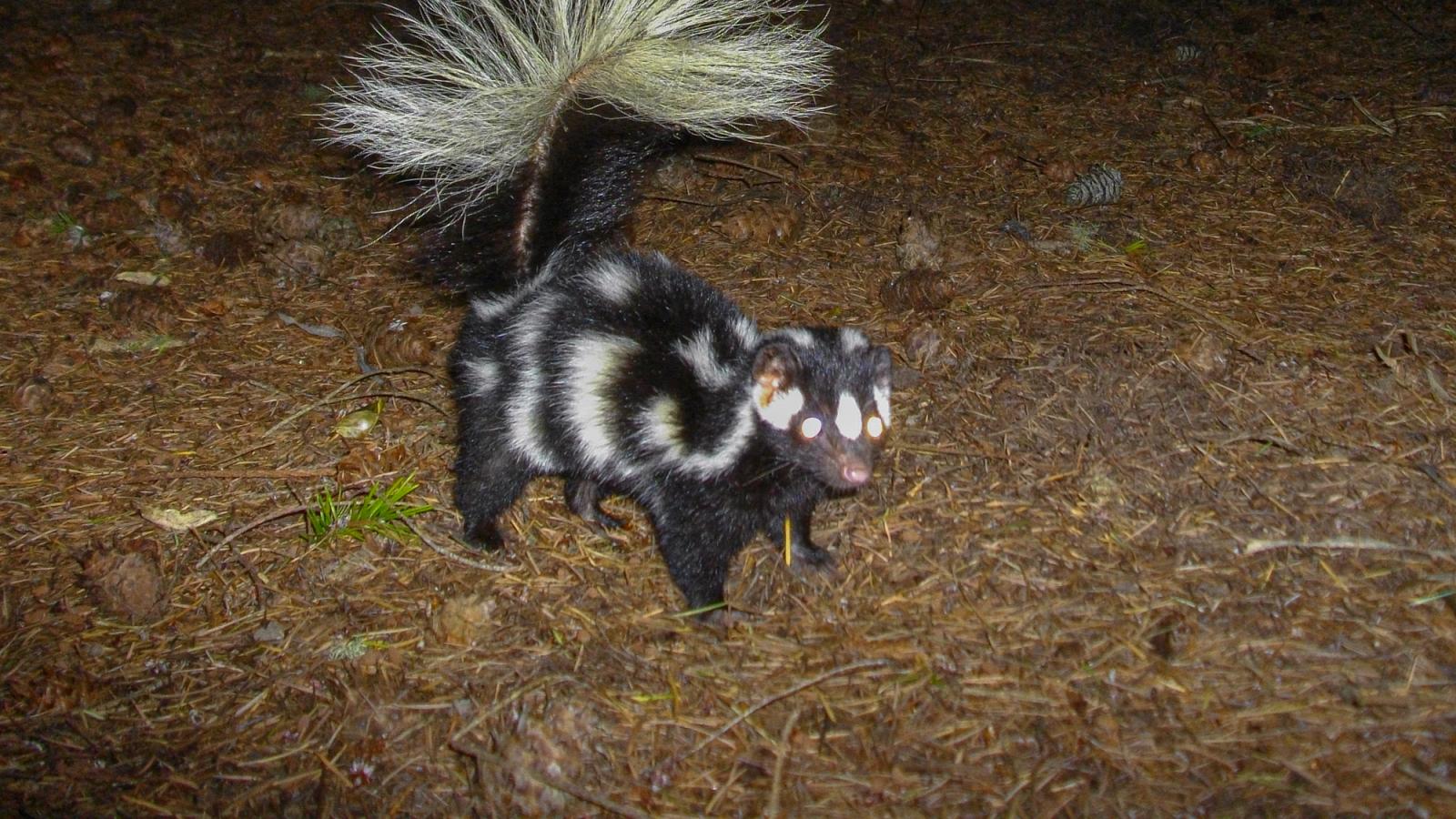
Less commonly seen, but no less charming, is the western spotted skunk (Spilogale gracilis). Smaller and more elusive, spotted skunks tend to favor quieter, natural areas and are rarely seen unless a camera trap or lucky observer is fortunate enough to spot one.
Though they are often misunderstood or disliked because of their smell, skunks play an important ecological role. As omnivores, they consume large numbers of insects, rodents and other small pests, helping to maintain balance in the ecosystem.
Skunk mating season runs from late December through early spring. During this time, male skunks become true romantics on a mission. In search of love, they wander beyond their usual home ranges, traveling long distances at night to find receptive females.
These extended nighttime wanderings will often bring the skunks into more frequent contact with humans, pets and cars than is usual for the rest of the year. Because of this, the skunks’ search for love can carry serious risks. There is a marked increase in skunk roadkill during this season, as males crossing unfamiliar roads at night and during the early morning hours bring them into contact with traffic.
After mating, female skunks retreat to dens to prepare for birth. Following a gestation period of about two months, they typically give birth to litters of four to six kits in the spring. The baby skunks will remain with their mothers for a few months as they learn to forage and fend for themselves.
This month, if you catch an extra skunky whiff on the breeze or spot a flash of black and white fur in the underbrush, it’s likely a sign that your wildlife neighbors are out searching for their Valentines, too.