
Rare Horned Lizard Sighting Offers Hope for Habitat Restoration
Published August 6, 2026
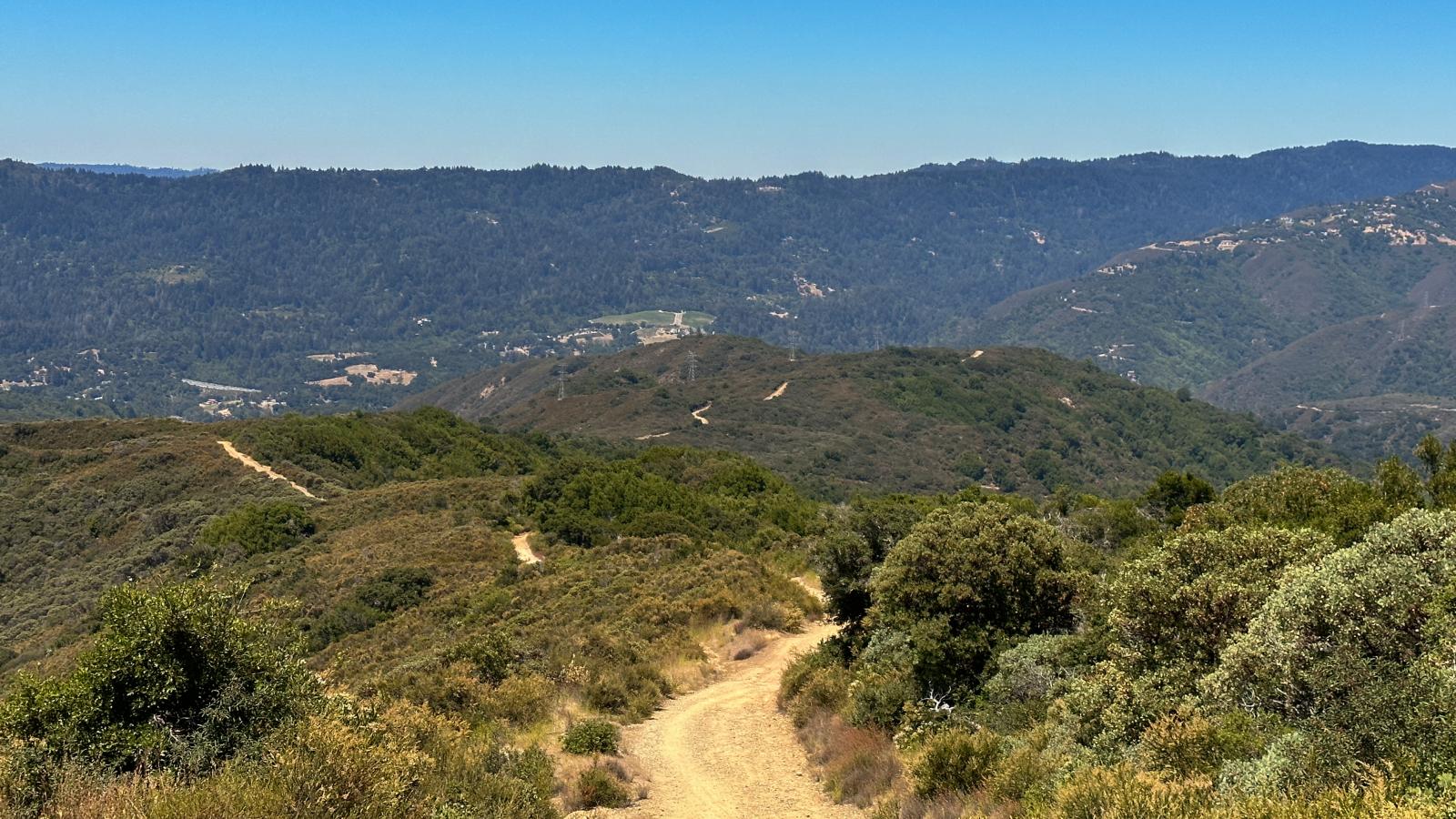
A rare reptile made an unexpected appearance this past spring in Sierra Azul Open Space Preserve. While surveying a recently restored area of the preserve, independent researcher Ken Hickman spotted a Blainville’s horned lizard (Phrynosoma blainvillii) scurrying across the road in front of him.
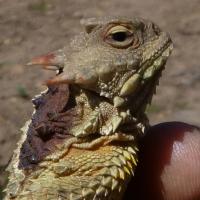
For Hickman and Midpen biologists, this observation was notable because Blaineville’s horned lizards are among the region’s most distinctive reptiles – and one of its rarest. The species is a California Species of Special Concern and has become increasingly uncommon throughout the Santa Cruz Mountains.
With a flattened body ringed by spiky scales and a crown of sharp horns, Blainville’s horned lizard is hard to mistake for any other local lizard. They also have a unique arsenal of defenses: when threatened, they can puff themselves up like a spiky balloon to make themselves harder to swallow and can even squirt foul-tasting blood from the corners of its eyes to deter predators.
Locally, the species has lost much of the sandy, open chapparal habitat it depends on to mining activities, development, agriculture and invasive species. Today, Blainville’s horned lizards only persist in a couple of locations throughout the region. Before this spring, Hickman, who regularly surveys Sierra Azul, had not seen one in the area since 2015. Several other reptile surveys in the interim also failed to detect the species.
The discovery was even more exciting because the lizard was found in an area where Midpen recently completed habitat restoration to support the Santa Cruz kangaroo rat (Dipodomys venustus venustus), another rare wildlife species designated as critically imperiled by CDFW. Both species depend on similar open, sandy chaparral habitats. While kangaroo rats feed on the seeds of native chapparal plants, the lizards rely primarily on native ant species that can be found in the same environment. In other areas of California, kangaroo rats and horned lizards are often found in similar habitats, and horned lizards will even sometimes use kangaroo rat burrows to escape the heat and regulate their body temperature.
To improve habitat for kangaroo rats, Midpen crews removed encroaching shrubs and knobcone pines that were gradually compacting the soil and converting open montane chapparal into denser, shadier woodland. The work restored patches of bare, sandy ground and helped aerate the soil, improving the open habitat both species require, while also improving wildland fire resilience by maintaining the landscape’s naturally open character.
Although the project was designed with kangaroo rats in mind, biologists hoped it would benefit other native plants and animals as well. Those hopes were reinforced when several rare, fire-adapted plant species germinated in the restored area, including woodland madia (Monolopia gracilens), Hickman’s checkerbloom (Sidalcea hickmanii ssp. hickmanii) and Brewer’s calandrinia (Calandrinia breweri).
The appearance of a Blainville’s horned lizard adds another encouraging piece to that picture. Though a single sighting isn’t enough evidence to draw the conclusion that the restoration work has increased horned lizard populations in Sierra Azul, finding this species in restored habitat is another sign that the project may be recreating the conditions these specialized animals require.
Midpen will continue monitoring the restored areas for kangaroo rats and horned lizards while expanding habitat restoration efforts. With the help of a $500,000 grant from the Santa Clara Valley Water District, Midpen plans to restore an additional 40 acres of habitat adjacent to areas where kangaroo rats are known to still occur. By expanding suitable habitat next to existing populations, biologists hope to create even more opportunities for Santa Cruz kangaroo rats, Blainville’s horned lizards and the many other species that depend on these unique ecosystems to thrive.