
New Genetics Study Reveals Rarity of Santa Cruz Kangaroo Rats
Published March 5, 2026
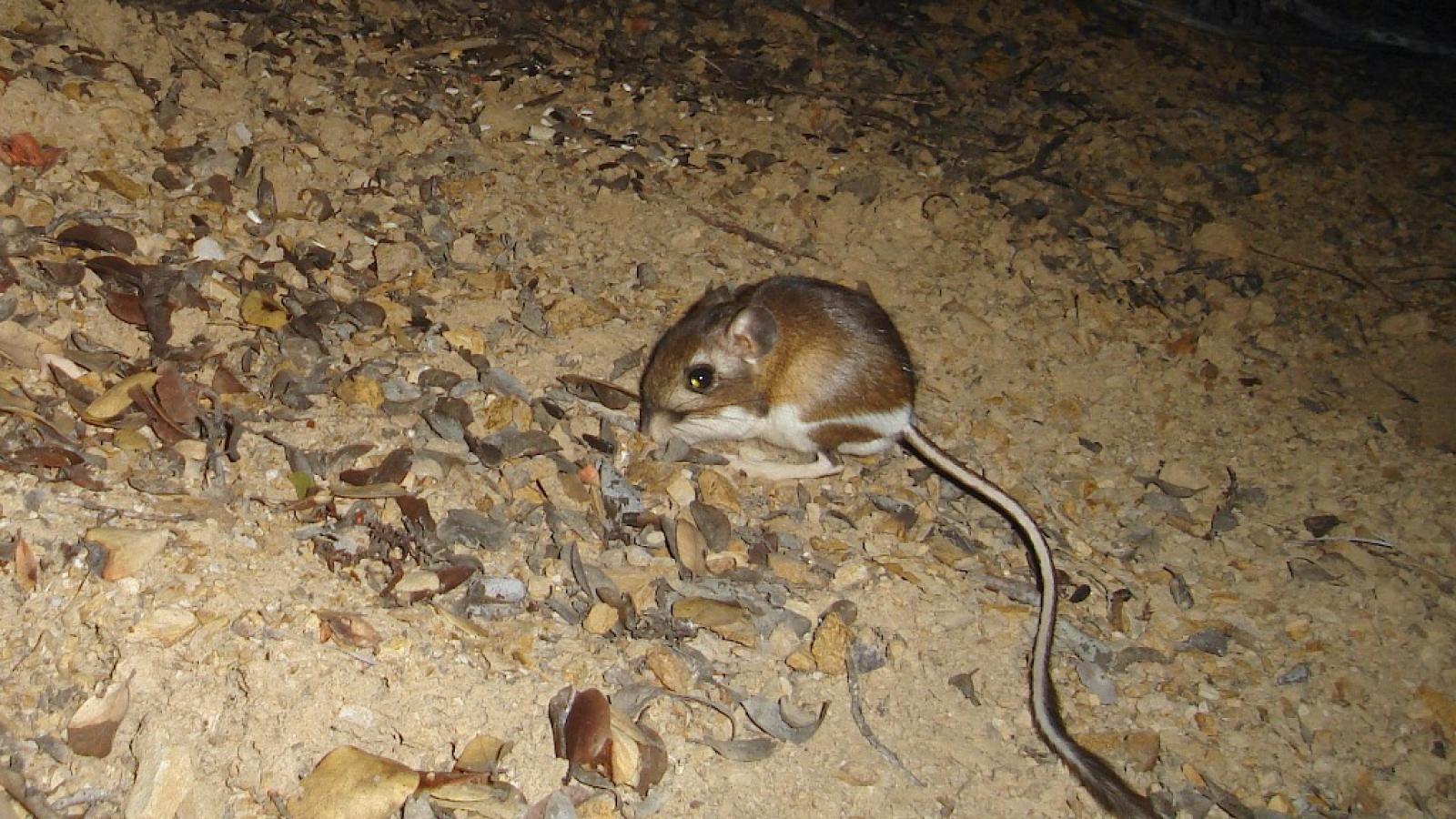
Following the exciting rediscovery of the Santa Cruz kangaroo rat (Dipodomys venustus venustus) in Sierra Azul Open Space Preserve in 2019, Midpen and collaborators at UC Davis, UC Santa Cruz and Cal Poly San Luis Obispo launched a five-year genetics research project to learn more about kangaroo rat populations in Central California.
Using live-capture traps and historic museum specimens, researchers collected and analyzed samples of kangaroo rat DNA. Findings about their evolutionary history and range have recently been released and are now being used to develop science-based conservation strategies to protect this rare endemic species.
Santa Cruz kangaroo rats once populated the Santa Cruz Mountains as far north as Portola Valley and as far south as Fremont Peak State Park. Today, the population in Sierra Azul Preserve is confirmed by the genetics study to be one of only two known populations that remain. The other population inhabits a region of the Santa Cruz Mountains near Felton in Henry Cowell Redwoods State Park.
“The findings of the genetics study support the argument that Santa Cruz kangaroo rats should be listed and protected as an endangered species,” said Midpen Wildlife Biologist Matt Sharp Chaney. “They have limited numbers and poor genetic diversity and continue to be threatened by habitat fragmentation.”
Contrary to their name, these rare rodents are more closely related to chipmunks than to kangaroos or rats. They can be found in areas of loose, sandy soil in chaparral habitat where they burrow and store seeds—particularly from manzanitas—for future meals. The seeds that remain uneaten are protected from wildfire, helping the plants regenerate. Santa Cruz kangaroo rats’ critical role in maintaining ecological balance makes them a keystone species of the chaparral.
Habitat loss and fragmentation due to development and changes in vegetation management have made the Santa Cruz kangaroo rat population vulnerable. Fire suppression over many decades has allowed knobcone pines and other plants to slowly encroach into chaparral, increasing the density of brush and shrinking areas with the open, sandy soils kangaroo rats need.
To protect and enhance Sierra Azul Preserve’s Santa Cruz kangaroo rat population and its chaparral habitat, Midpen is developing a plan using science-based conservation strategies informed in-part by the recently completed genetics study. The plan includes habitat connectivity modeling, translocation and species monitoring. It will also expand on ongoing wildfire resiliency work to selectively manage vegetation in a way that expands suitable kangaroo rat habitat and reduces wildfire risk in the area.