
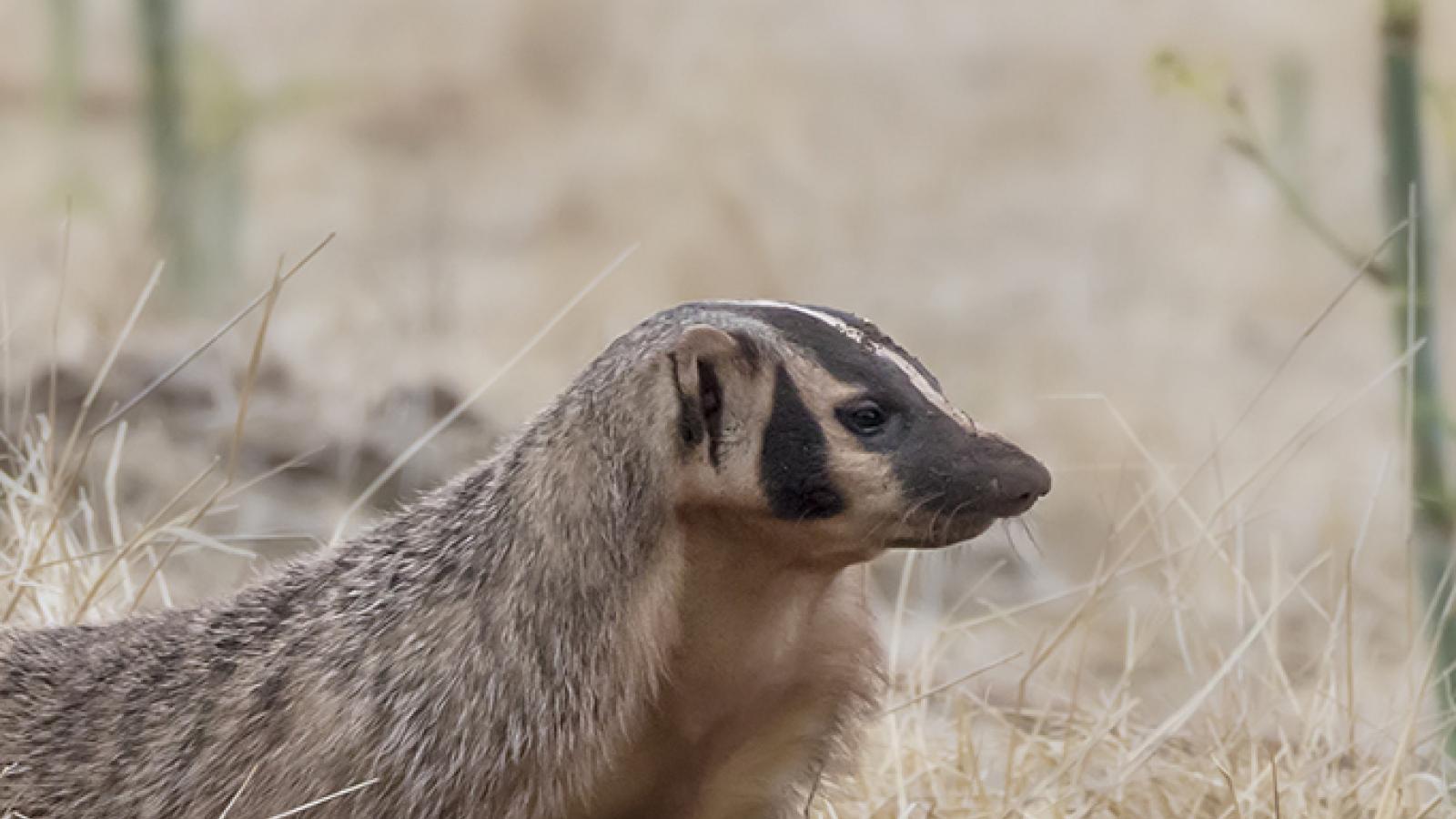
Did you know that California is home to the American badger (Taxidea taxus)? We have a limited but mighty population in the San Francisco Peninsula, concentrated in grasslands in the Skyline region!
With its short, stocky build and impressive foreclaws (up to 5 cm long!), the American badger is a digging machine. The badgers’ large, partially webbed front feet are perfect for shoveling while their wedge-shaped heads and loose skin allow for easy navigation through their burrows. They dig many different burrows for sleeping, hunting, food storage and birthing, often with a distinctively massive pile of dirt at the entrance.
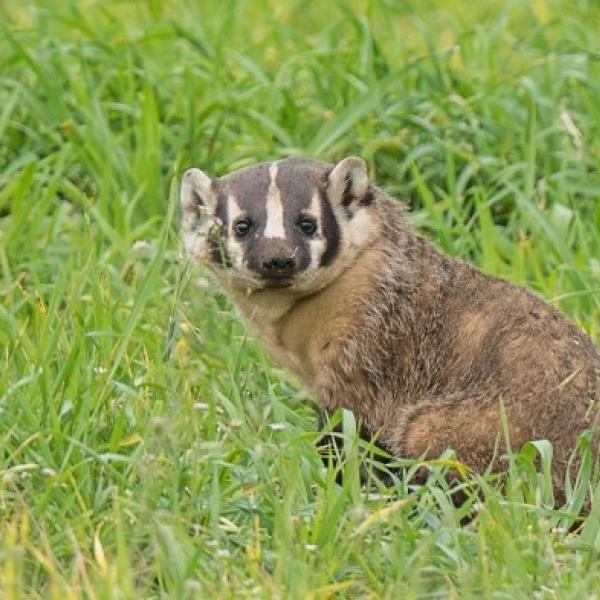
American Badger Diet
Carnivorous, and they mostly eat small burrowing rodents like gophers, ground squirrels and voles.
Digging prey animals out from under the ground is their trademark hunting strategy.
Opportunistic and will eat insects, birds, bird eggs, reptiles, amphibians and even wasp nests!
Nocturnal and do most of their hunting at night.
“Follow their food” - we might expect badger to be in areas where there are a lot of ground squirrels or pocket gophers due to research that shows a strong relationship between presence of badgers and density of their prey.
Benefits of the Badger
American badgers are ecosystem engineers. All of their digging causes disturbances in the soil, known as biopedturbation, which affects soil properties and the landscape that develops from it. Uninhabited badger burrows can also serve as shelter for other animals, including burrowing owls which we find in Midpen properties in the winter.
Even though they can be found across most of the U.S. and into Canada and Central America, American Badgers are one of the least understood mammals in North America because of their nocturnal and underground lifestyle and the lack of historical species data. They are very difficult to study!
Whole Lot of Habitat
If you’re driving along the scenic highways in the Skyline region or through grazing and agricultural properties along the coast, slow down and keep an eye out for badgers. Unfortunately, vehicle strikes are the most common cause of badger mortality in the area. Badgers are also highly vulnerable to rodenticide poisoning and habitat loss and fragmentation due to their need for large, connected grassland ranges.
The American badger may not be as large of an animal, typically growing up to 3 feet in length and between 10 and 30 pounds, but they have home ranges in California that average is ~4 square miles. These home ranges are also very variable and can expand during breeding season when they are searching for mates.
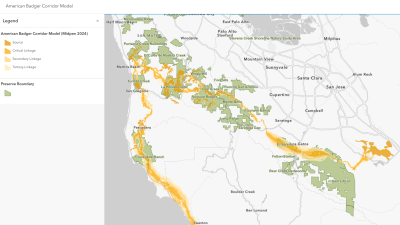
American badgers need to be able to move large distances and connect from one grassland to the next in order to find food, mates or new territories as they grow into adulthood. Midpen has created a web map modeling the American badger habitat corridor that visualizes badgers' movements and habitat needs and the importance of regional connectivity to their health and survival, especially in open grassland habitats.
Better Understanding Badgers
The American badger is listed as a species of special concern by the California Department of Fish and Wildlife. For years, Midpen knew that badgers occurred within our properties and were struggling under numerous threats, but we lacked enough data to make informed management decisions. We decided to change that by designing a research study and fostering badger conservation with other entities.
Open Space Authority’s Habitat Management Plan – for Coyote Valley
Master’s Thesis from Chris Lay
Now, Midpen is working with several partners to further badger research and conservation efforts throughout the region. We are currently coordinating with the California Department of Fish and Wildlife to do genetic analysis of local badger populations and connecting with partners, stakeholders and public and private landowners to foster badger research and conservation in the Peninsula.
Other regional habitat connectivity efforts, like the ongoing Highway 17 Crossings Project may positively impact wildlife populations by creating continuous habitat ranges for species like American badgers to more easily traverse.