
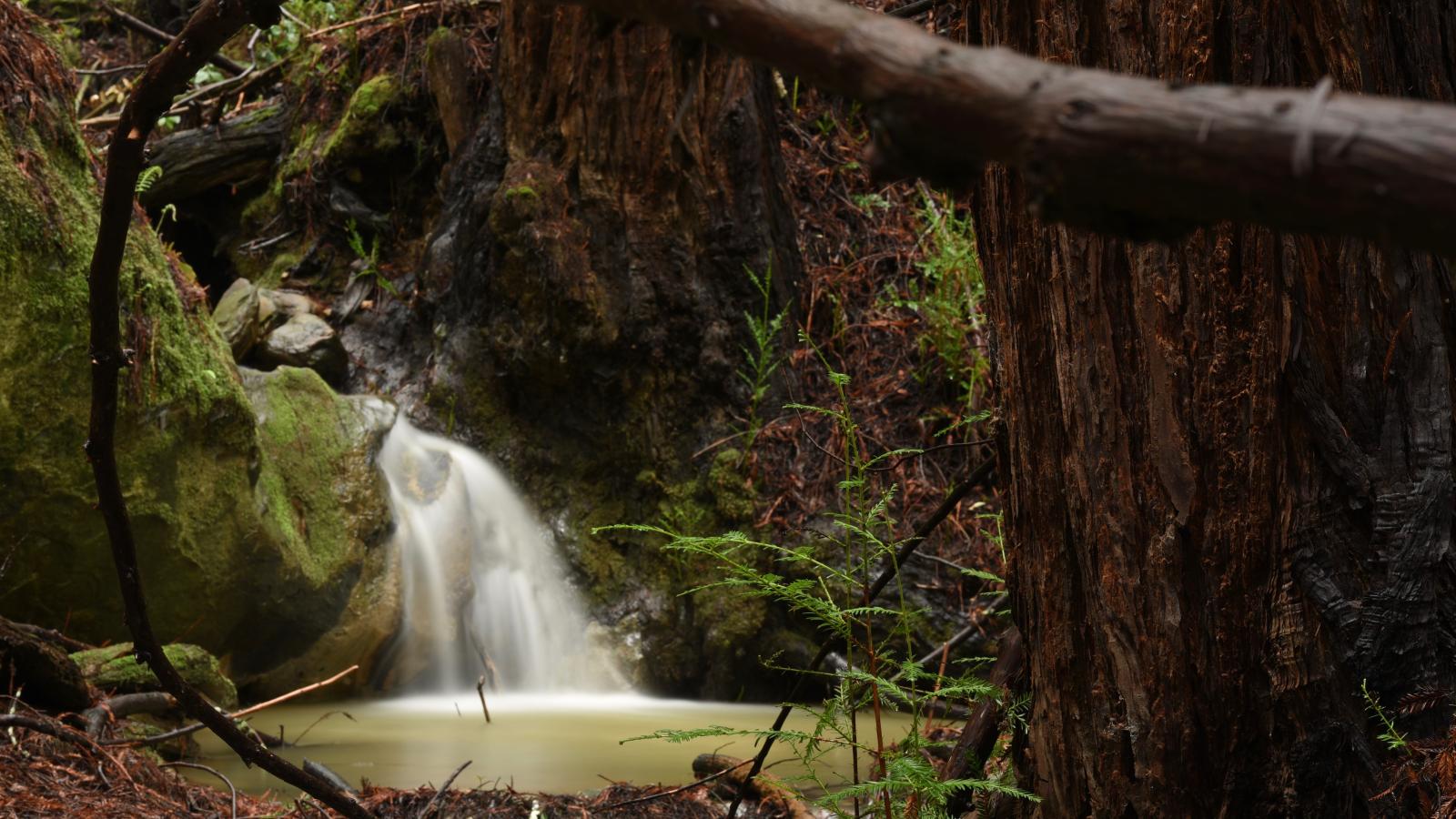
There are four interpretive panels along the “Rock of Ages” trail. Below are the different “stops” with interpretive information on each panel; join this digital history tour along the trail or from your own home. All photos are from August Schilling, Portola-Hall Hills (1926).
Stop 1: August Schilling’s Country
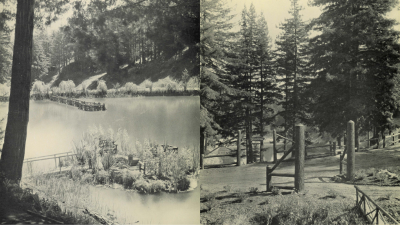
Thornewood Open Space Preserve’s rich history reveals remnants still visible today. In the 1850s, Irish lumberman Dennis Martin logged the area and built a reservoir for his sawmill. In 1870, German immigrant August Schilling entered the coffee business alongside James Folger (of Folger Coffee), and in 1881 co-founded the successful Schilling Spice Company. Hoping to purchase land in the Woodside area, Schilling acquired land from Edna and Julian Thorne, for whom the preserve is named. In the 1920s, Schilling’s 150-acre estate featured a mansion he called “Portola Hall”, located near the intersection of old La Honda and Portola Road. Following Schilling's death in 1934, the mansion was demolished in 1952 due to a fire hazard. The estate was bequeathed to the Sierra Club Foundation, and in 1978, the estate and land found new purpose with Midpen. Today, visitors can explore remnants of Schilling’s legacy in sites such as the Redwood Temple, Rock of Ages, Pergola, and view artificial rocks made from wire mesh and cement by Italian artisans.
Stop 2: The Redwood Temple
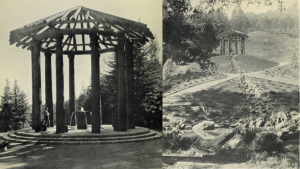
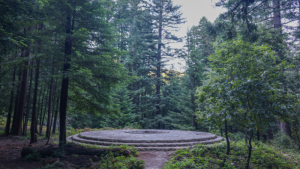
The Redwood Temple, built around 1920 by spice merchant August Schilling, was one of many scenic features within his grand estate which extended from the valley below on Portola Road up the canyon as far as La Honda Road. Only the concrete foundation and fountain basin remain today. The impressive structure, estimated to be 50 feet tall and 40 feet wide, was constructed of redwood logs and featured a central fountain that flowed across deep grooves in the concrete base, into an artificial stream leading down to “Schilling Lake” below.
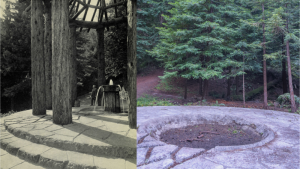
Stop 3: The Rock of Ages
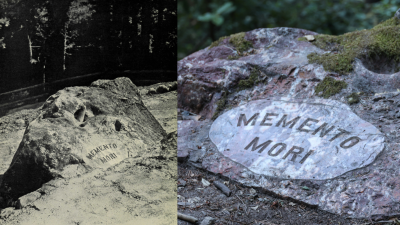
This rock, described in Schilling’s book as the “Rock of Ages,” is likely a Bible reference to God’s unchanging nature for believers. The rock likely comes from “Arden Hills,” referring to Coyote Hills in Fremont near the adjacent Arden salt ponds, which were operated by Schilling and the Leslie Salt Company. If you look closely, you can see the rock’s reddish color, showing its composition of poppy jasper, a type of sedimentary rock. There are also signs of its use as a grinding rock by indigenous people in its original location. The rock’s inscription, “Memento Mori,” is Latin for “remember you must die”, serving as a reminder of mortality and, in a religious context, warns against sin and urges people to prepare for judgment day.
Stop 4: The Pergola
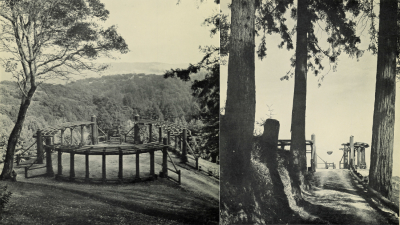
At this site, there was an impressive redwood pergola. Constructed by August Schilling for his guests’ enjoyment, the pergola represented the pinnacle of the artificial features along this trail, which once served as a roadway for both automobiles and carriages.