
In late January, a young mountain lion turned up in San Francisco and made a splash in the news. Known to researchers as 157M, the mountain lion was likely born in Rancho San Antonio County Park & Open Space Preserve near Cupertino and traversed nearly 50 miles up the peninsula to wind up in a dense urban environment.
While 157M was located by officials from the California Department of Fish and Wildlife (CDFW) and successfully returned to natural habitat in the Santa Cruz Mountains, his arduous journey underscores a growing regional challenge. Mountain lions are highly territorial, requiring ranges of 60 to 100 square miles to thrive. Today, roads and human development fragment these natural ranges, forcing mountain lions, deer and other wildlife to make perilous road crossings as they seek suitable habitat and mates.
On February 12, 2026, the California Fish and Game Commission voted to list the mountain lion population in the Santa Cruz Mountains as threatened under the California Endangered Species Act in part due to the effects of habitat fragmentation and geographic isolation.
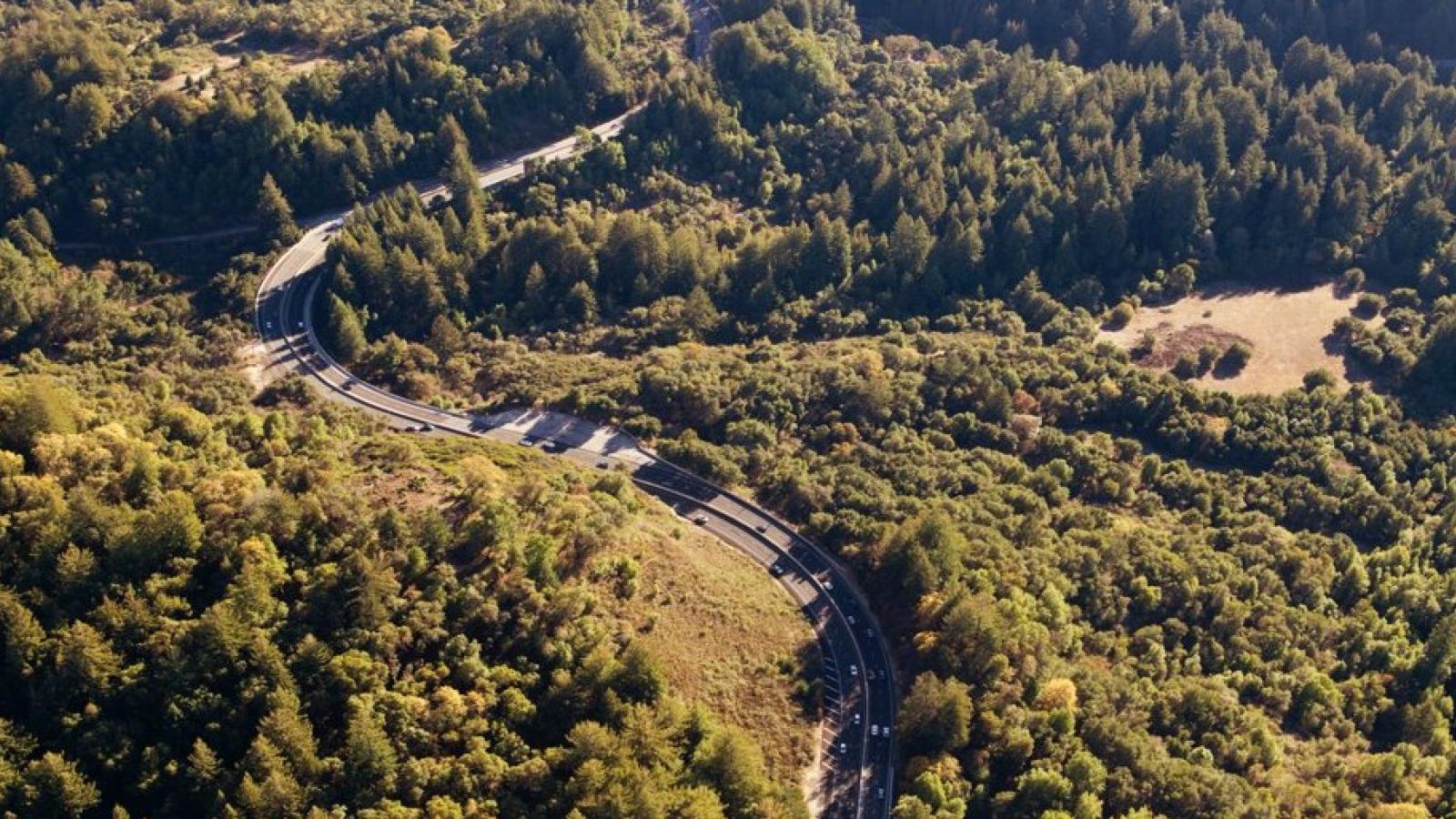
A primary solution to keeping mountain lions out of urban areas and within their natural habitats is specially designed wildlife crossings. These allow for wildlife movement across major barriers such as highways and freeways. The Midpeninsula Regional Open Space District (Midpen), in partnership with Caltrans and the Santa Clara Valley Transportation Authority, is advancing a wildlife and trail crossing project designed to provide safe passage for mountain lions and other wildlife across Highway 17 south of Los Gatos, while also connecting recreational trails.
Midpen’s Highway 17 Wildlife Crossing project will connect 30,000 acres of protected public lands on either side of the highway and provide a much-needed route for wildlife to traverse from the open space lands in the Santa Cruz Mountains into other nearby mountain ranges.
“Young lions must disperse to establish their own ranges,” explained Midpen’s senior wildlife biologist, Karine Tokatlian. “By reconnecting areas of core habitat across Highway 17, this crossing project will facilitate the natural dispersal and movements of wildlife and support the genetic health of previously isolated populations.”
The project’s proposed crossing site, located just 12 miles from where 157M was born, was selected using GPS collar data gathered from the Santa Cruz Puma Project and bolstered by roadkill and wildlife camera surveys showing where mountain lions are already attempting to cross Highway 17. According to data from Caltrans and the California Department of Fish and Wildlife (CDFW), this stretch of highway is a major wildlife-vehicle collision hotspot. The data show that since 2017, 19 mountain lions have been killed on the 20-mile stretch of Highway 17 between Los Gatos and Santa Cruz. Forty-seven percent of those lions were killed within two miles of the proposed crossing location.
“Without a crossing at this location, we can expect one to two mountain lions to be killed here every year,” said Tokatlian. This was further evidenced on February 4, when a female mountain lion was struck by a vehicle and died directly at the project location. “By reconnecting these fragmented landscapes, the Highway 17 crossings project will do more than just prevent wildlife-vehicle collisions. It will help sustain the long-term health of mountain lions and other wide-ranging wildlife in the Santa Cruz Mountains by supporting gene flow, increasing access to food and providing more room to roam. ”
The project has completed environmental review and is in the critical design and engineering phase; teams are finalizing specifications and estimates. While local voters have already dedicated $14 million toward the project through Measure AA, the total cost is estimated at $40 million. Midpen is actively pursuing additional state and federal funding to close the remaining gap.
“On a larger scale, Midpen’s Highway 17 wildlife crossing project will become a critical part of an essential network of other similar projects regionally and across the state that are allowing wildlife to move safely through the landscape,” Tokatlian said. “As a land management agency, Midpen is proud to play a role in protecting biodiversity and ensuring a resilient, sustainable future for the wildlife that calls the Bay Area home — like 157M.”
To learn more about this project and subscribe to receive project updates, visit openspace.org/HWY17.
Story posted February 2, 2026