
Surveying Reptiles and Amphibians Across Midpen Preserves
Published December 4, 2025
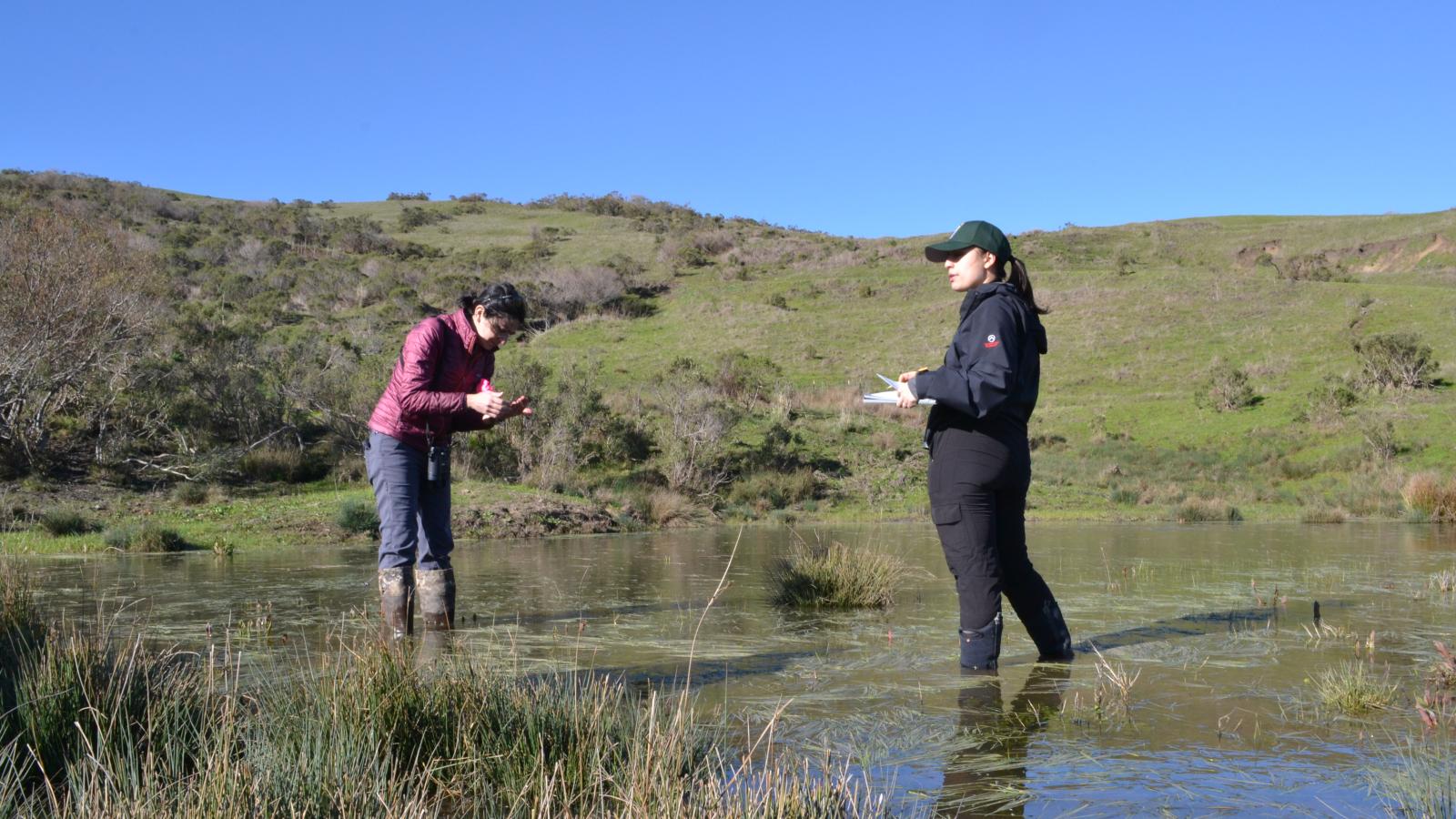
In several Midpen preserves, a small team of biologists and consultants have been scanning for the subtle signs of creatures that many visitors never notice. They aren’t tracking charismatic mountain lions or tuning in to the sounds of songbirds – they are listening for the soft rasp of a frog’s call, looking closely for a salamander’s smooth flank and edging around ponds to spot jelly-like amphibian egg masses.
This is Midpen’s first District-wide effort to document which reptiles and amphibians — or “herps” in biologist shorthand — live in and around the aquatic and semi-aquatic environments on Midpen lands, and to find out what that means for future restoration and planning. Herps are more than curiosities; they act as early warning indicators for habitat health.
Amphibians in particular have permeable skin that absorbs both water and oxygen, making them especially sensitive to environmental changes — so when ponds dry up, habitats change or water quality declines, their populations often show the effects first, offering a window into the health of the entire ecosystem.
Over the past season, the team visited nine preserves, surveying about 30 ponds, 12 stream segments and one marsh. They’ll repeat the work next year so that the dataset captures seasonal and year-to-year variation and builds a fuller picture of the population. To maximize detections, the survey employs a full toolbox of approaches: daytime and nighttime visual searches, audio surveys and environmental DNA (eDNA) testing all play a role in seeking out hidden herps. Combining methods matters — sometimes an animal is seen but not picked up by eDNA, and other times the eDNA reveals a species that escaped visual detection.
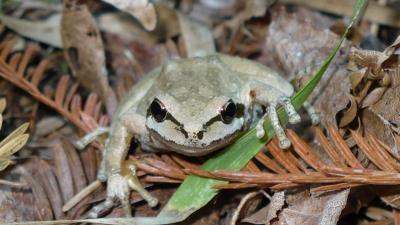
Surveyors are focusing on several special-status and locally rare native species, including California red-legged frogs, California tiger salamanders, California giant salamanders, red-bellied newts, northwestern pond turtles, foothill yellow-legged frogs and San Francisco garter snakes.
The foothill yellow-legged frog is a particular priority: historical records and the presence of nearby populations suggest that Midpen’s Sierra Azul Preserve and adjacent areas could possibly still host some populations, and confirming its presence could prompt future management efforts to support this species.
The results from the survey, when completed in 2026, will inform regional conservation and restoration efforts and help refine where prescribed burns or trail projects can safely occur.